Tree Trimming vs. Structural Pruning: ANSI A300 Standards Explained
Trimming focuses on exterior clearance and aesthetics, while structural pruning follows ANSI A300 standards to promote canopy health, wound closure, and storm resilience.
Cosmetic Trimming vs. ANSI A300 Pruning: The Core Distinction
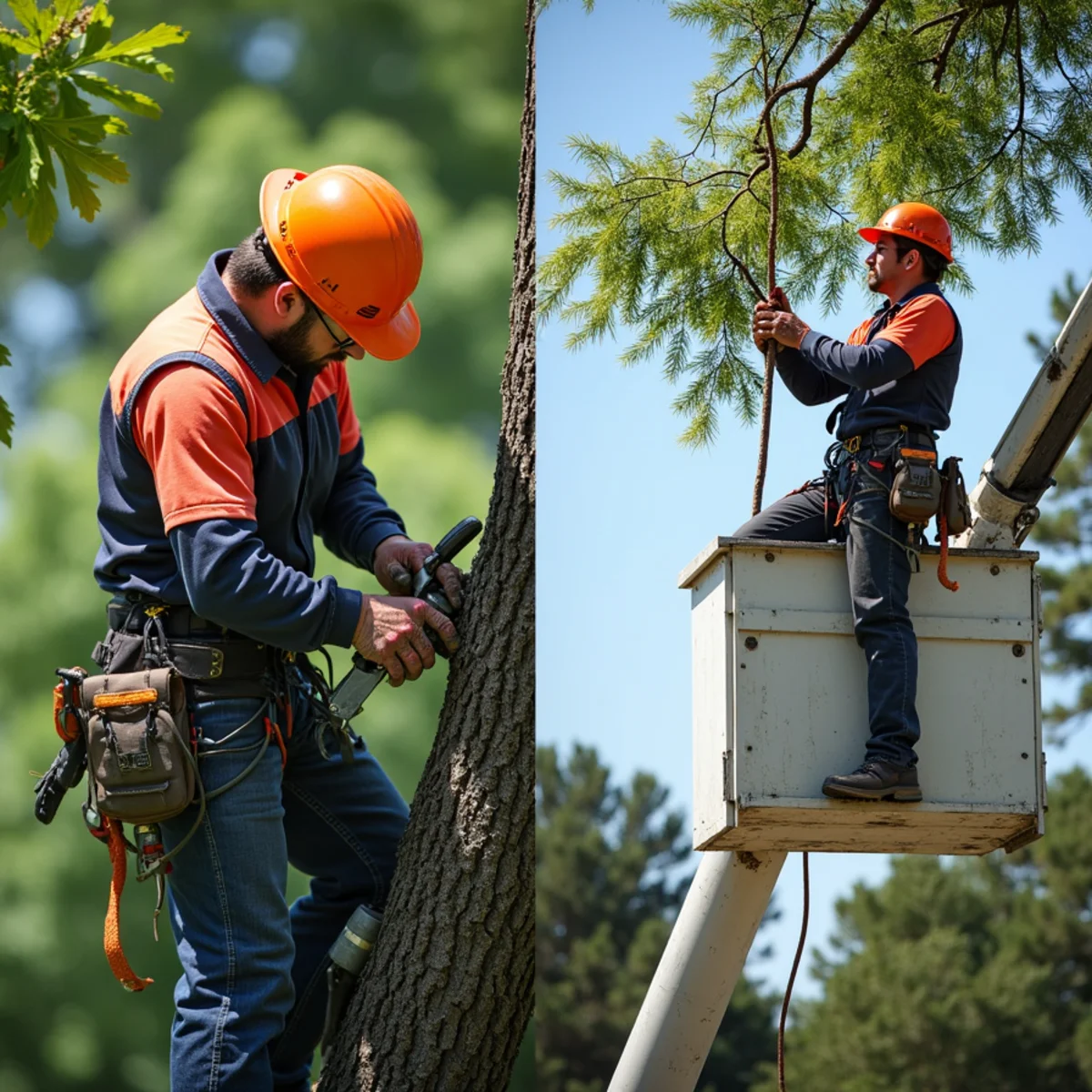
In everyday conversation, homeowners and commercial landscape maintenance crews use the terms 'tree trimming' and 'tree pruning' interchangeably. In professional arboriculture, however, they represent two radically different philosophies with drastically different outcomes for tree longevity.
Trimming is primarily an aesthetic and clearance-driven process: cutting back branch tips with mechanical hedge shears to shape a shrub, shearing branches away from a gutter, or clipping clearance above a driveway. While necessary for clearance, indiscriminate trimming often ignores tree biology, making improper cuts that leave dead branch stubs.
Structural Pruning, by contrast, is an exact biological science governed by the American National Standards Institute (ANSI A300) standards. Certified arborists prune trees to optimize canopy architecture, improve wind aerodynamics, eliminate hazardous structural defects, and guide the tree's natural healing mechanisms (compartmentalization).
The Biology of the Branch Collar & The Disaster of Flush Cuts
Trees do not possess immune systems that replace damaged cells; instead, they survive by 'compartmentalizing' damage through a process known as CODIT (Compartmentalization Of Decay In Trees). Understanding where to make a cut is the difference between a thriving hardwood and a rotting trunk.
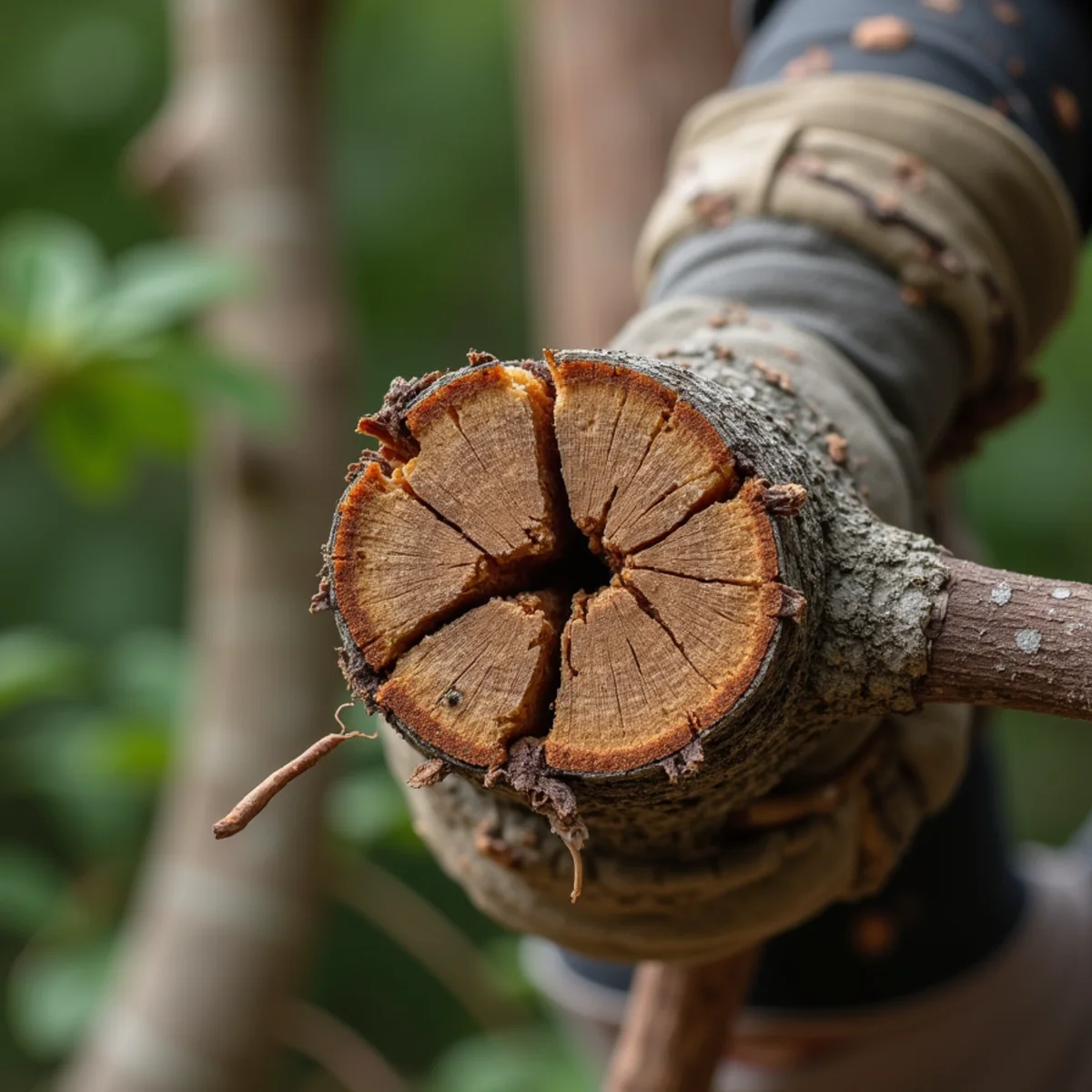
Where a branch attaches to the trunk, you will observe two critical anatomical landmarks: the raised 'branch bark ridge' on the upper side and the swollen 'branch collar' at the base. Inside the branch collar, the tree maintains high concentrations of chemical defense compounds. When a proper pruning cut is made just outside the collar, the tree rapidly rolls callus tissue (wound wood) over the exposed sapwood, sealing off the cut from airborne fungal spores.
Untrained landscapers frequently execute 'flush cuts'—sawing limbs completely flat against the trunk. Flush cuts slice directly through the branch collar, destroying the tree's defensive barrier and carving an irreversible highway for heartwood rot straight into the center of the tree.
Questions About Your Trees?
Speak directly with our local tree team. No automated robots.
The Four Primary ANSI A300 Pruning Classifications
Professional tree care companies utilize four standardized pruning classifications tailored to specific tree health and risk management goals: 1. Crown Cleaning: The selective removal of dead, dying, diseased, broken, or weakly attached branches throughout the entire canopy. Cleaning eliminates hazardous hangers and stops disease spread without removing healthy foliage. 2. Crown Thinning: The selective removal of small interior branches to increase sunlight penetration and air circulation through the crown. Thinning reduces the 'wind sail' effect, significantly mitigating storm blowdown risk. 3. Crown Raising: The removal of lower branches to establish vertical clearance for pedestrian sidewalks (8-foot clearance), roadways and garbage trucks (14-foot clearance), or residential roofs (8-to-10-foot clearance). 4. Crown Reduction: Selectively decreasing the overall height or spread of the canopy by cutting back terminal branches to lateral branches that are at least one-third the diameter of the parent stem. This preserves natural crown form while easing mechanical load on overextended limbs.
Why Tree Topping ('Hat-Racking') Is Canopy Mutilation
Despite decades of arborist education, unscrupulous door-to-door tree trimmers continue to promote tree topping—indiscriminately lopping off large upper limbs to reduce tree height. Topping is the single most destructive practice in tree care.
Topping removes 50% to 100% of the leaf-bearing crown, plunging the tree into starvation mode. In a desperate bid to produce foliage, the tree releases hundreds of rapid, weakly anchored 'water sprouts' from dormant buds beneath the bark. These brittle shoots lack interlocking wood fibers and snap easily in moderate wind. Furthermore, the massive blunt stubs left by topping cannot heal, resulting in massive internal trunk hollows that transform majestic oaks into dangerous liability hazards.
Seasonal Pruning Timing for Piedmont Carolina Trees
Timing matters when scheduling arborist pruning across Lake Norman: • Winter Dormancy (December – February): Best overall period for structural pruning of White Oaks, Red Oaks, and Maples. Sap flow is minimal and insect vectors are dormant. • Late Spring / Early Summer: Ideal for light thinning and removing deadwood once trees have fully leafed out. • Summer / Early Fall: Excellent for view pruning on lakefront lots to evaluate sightlines toward the water. • Avoid Autumn: Pruning during leaf drop (October – November) should be avoided because fungal spores are actively dispersing and pruning cuts heal slowly ahead of freezing weather. Race City Tree Crew adheres strictly to ANSI A300 pruning standards across Mooresville, Davidson, and Cornelius. Call (321) 478-0689 to schedule a structural pruning consultation.
Frequently Asked Questions
Why should a tree pruning cut never be made flush against the trunk?
Cutting flush against the main trunk removes the branch collar and branch bark ridge—the specialized anatomical zones where the tree produces chemical defense compounds (suberin and lignin). Removing this protection barrier leaves an open wound that the tree cannot seal, inviting wood-decay fungi and heartwood rot directly into the core of the trunk.
What is the three-cut method in tree pruning?
The three-cut method prevents heavy branches from stripping bark down the trunk as they fall. Cut 1 (undercut) is made 12 inches out on the underside of the limb. Cut 2 (top cut) is made 2 inches further out, severing the limb. Cut 3 is the clean final cut made just outside the branch collar.
How much green canopy can safely be removed from a tree in one year?
Under ANSI A300 standards, never remove more than 25% of a mature tree's total live foliage canopy in a single growing season. Removing more than 25% starves the tree of photosynthetic carbohydrates, triggers stress-induced water sprout growth, and weakens root defense systems.
Should pruning wounds be sealed with black tree paint or tar?
No. Modern arboricultural science has proven that tree wound dressings, tar, and pruning paints actually trap moisture and fungal spores inside the wound, accelerating heartwood decay. Trees do not 'heal' wounds; they compartmentalize them naturally by growing callus wood over clean cuts.
When is the best time of year to prune hardwoods in Piedmont North Carolina?
The ideal window for structural pruning is during winter dormancy (December through February). During dormancy, trees lose minimal sap, fungal spores are inactive, and the leafless canopy allows arborists to clearly evaluate branch architecture and structural defects.
Related Tree Services & Local Coverage:
Need Tree Service in Mooresville or Lake Norman?
Our local crews are ready 24/7. Get a transparent written price before any work begins.
Click to call instantly • 24 hours a day
Not Urgent? Send a Request
For the fastest help, call (321) 478-0689. Otherwise, send details below and we will contact you.