Signs of Root Rot in Lake Norman Hardwoods: Armillaria and Red Clay Hydrology
Poorly draining Cecil red clay across southern Iredell County holds moisture, suffocating root systems and inviting aggressive fungal pathogens like Armillaria mellea.
Piedmont Cecil Clay Hydrology & Anaerobic Root Suffocation
The mature oak and maple forests surrounding Lake Norman in Mooresville, Davidson, and Cornelius grow in Cecil and Georgeville soil series—dense, highly weathered red clays with tiny micropores. While nutrient-dense, red clay drains very slowly.
During wet Carolina winters and stormy summer periods, residential turf irrigation and stormwater runoff keep low-lying clay soils perpetually saturated. Submerged in water, tree root plates are starved of atmospheric oxygen. Feeder roots suffocate and die, providing an open biological gateway for aggressive soil-borne fungal pathogens to colonize the tree's primary anchor roots.
Identifying the Prime Culprits: Armillaria vs. Ganoderma
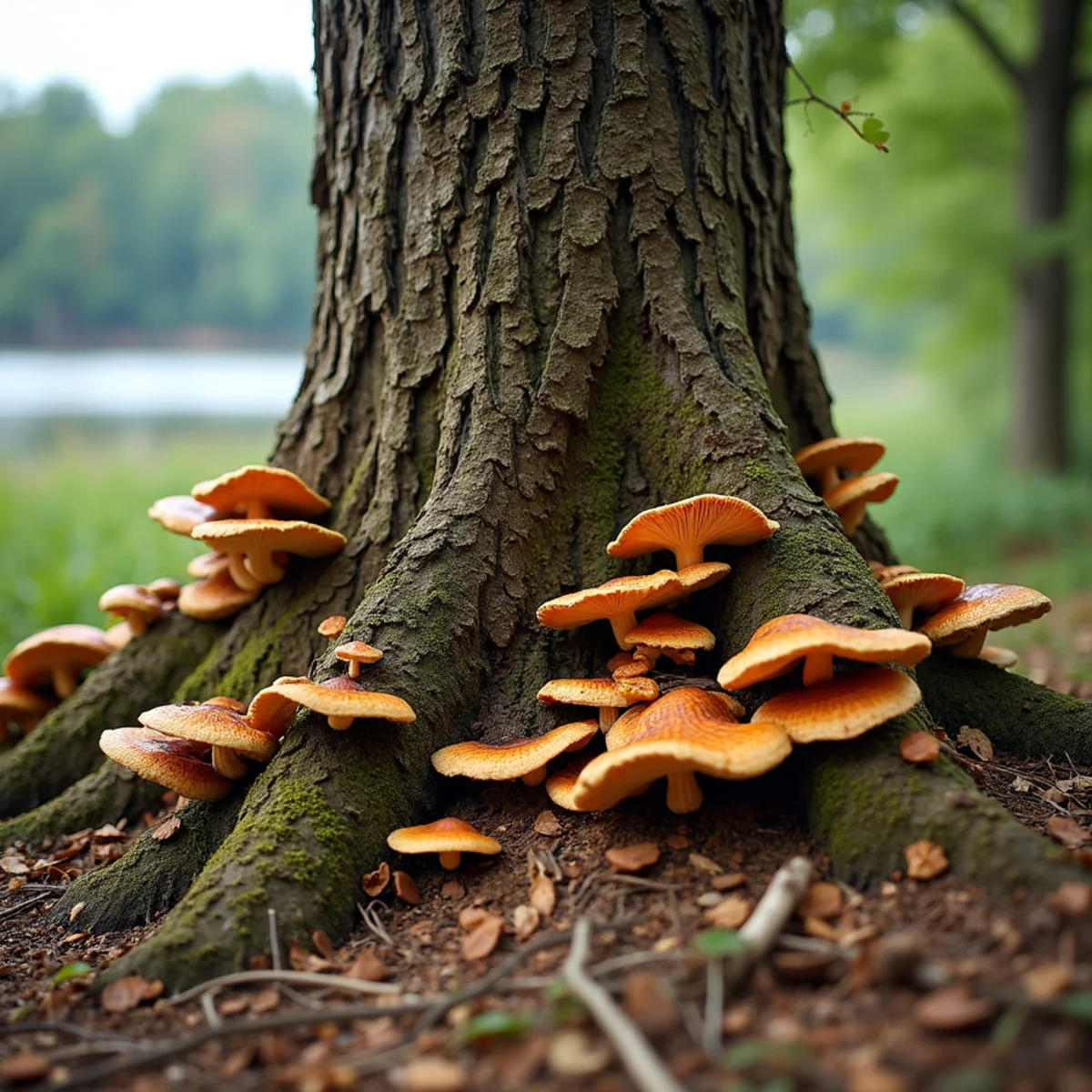
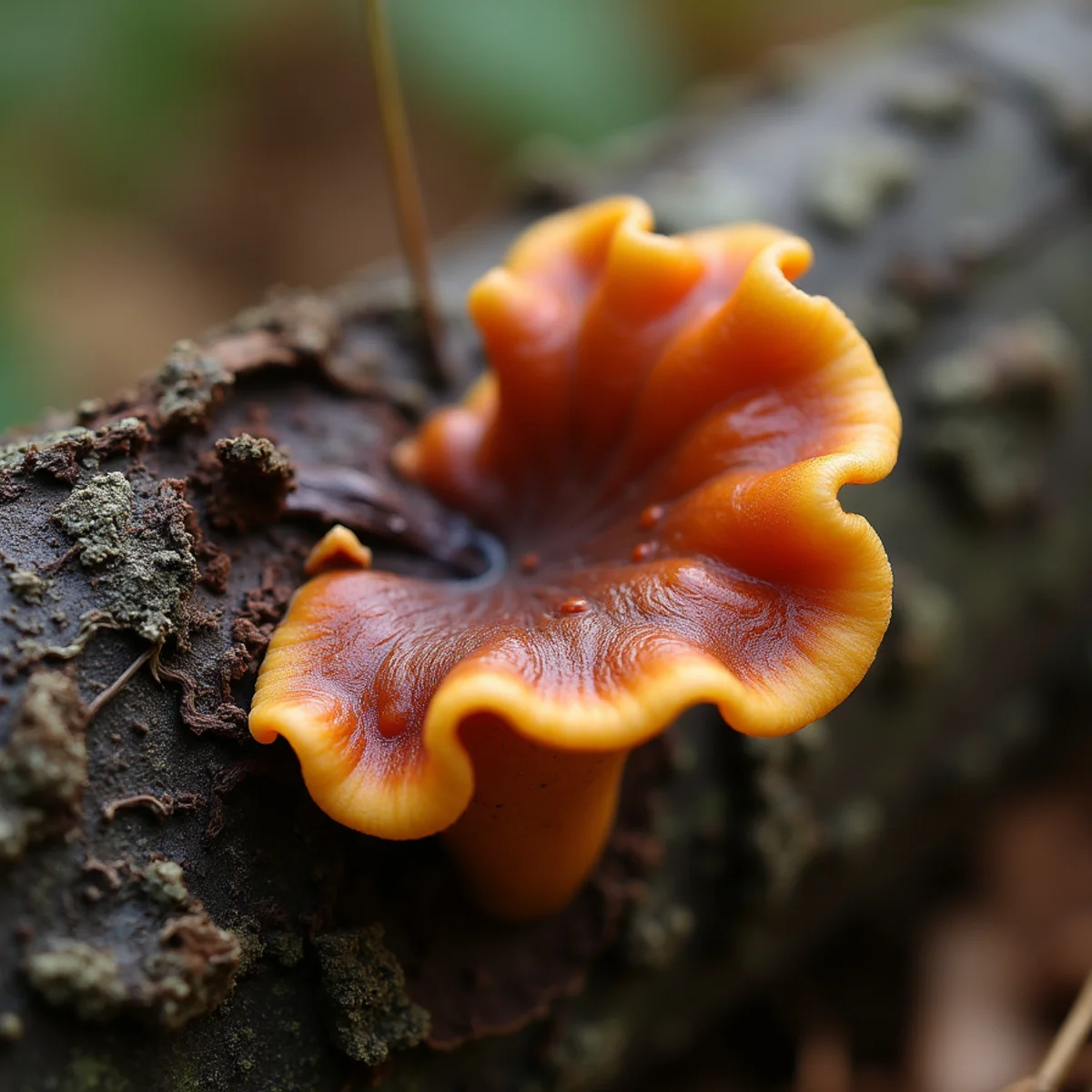
Two virulent fungal pathogens are responsible for the vast majority of sudden hardwood failures in the Lake Norman basin: 1. Armillaria Root Rot (Armillaria mellea - Honey Fungus): - Appearance: Clusters of yellow-brown to honey-colored mushrooms sprouting around the root flare in late summer and autumn. - Physical Signs: Peeling back dead bark at the root flare reveals thick, white, fan-shaped sheets of fungal mycelium that smell strongly of fresh mushrooms. At night, this fungus displays faint bioluminescence (foxfire). - Spread: Armillaria produces black, shoe-string-like cords called rhizomorphs that creep through red clay to infect adjacent trees. 2. Ganoderma Root & Butt Rot (Ganoderma lucidum & G. applanatum): - Appearance: Hard, woody, shelf-like bracket fungi growing directly out of lower trunk wounds or exposed surface roots. - Physical Signs: Brackets feature a glossy, varnished reddish-brown upper surface with a white or cream margin and a white porous underside that turns brown when scratched. - Structural Threat: Ganoderma selectively digests lignin, the natural glue that gives wood structural stiffness, leaving wood soft, spongy, and brittle.
Questions About Your Trees?
Speak directly with our local tree team. No automated robots.
Above-Ground Canopy Warning Signs: What the Leaves Reveal
Because root rot operates underground, observant homeowners should watch for secondary distress signals in the upper canopy: • Premature Autumn Coloration: Individual branches turning yellow or brown in July or August weeks ahead of normal seasonal dormancy. • Crown Dieback ('Stagheading'): Dead, leafless upper branches projecting like antlers above the green foliage canopy. • Stunted Leaf Size: Leaves in infected canopy sections appearing significantly smaller and paler than normal foliage. • Excessive Seed / Acorn Crops: Stressed trees frequently channel remaining energy into heavy stress-induced seed production as a survival mechanism.
Root Flare Sounding & Structural Stability Assessment
If you suspect root decay, perform an initial diagnostic check. Carefully clear away mulch and soil around the root collar where the trunk expands into the ground. Tap the trunk flare firmly with a wooden or hard rubber mallet: • Sound, healthy wood produces a sharp, solid, high-pitched rebound sound. • Decayed, hollow, or punky wood produces a dull, hollow thud, often accompanied by crumbling bark or sawdust. Race City Tree Crew utilizes diagnostic sounding and soil excavation to inspect compromised root systems. When extensive root loss is confirmed on a mature tree situated within striking distance of a home, preventive removal is essential before the next storm.
Crane-Assisted Removal of Decayed Hardwoods
Attempting to fell a tree with severe root rot using traditional climbing methods is extremely hazardous. Because anchor roots are rotted away, the weight of a climber or the shock of falling limbs can instantly uproot the entire tree.
Race City Tree Crew deploys hydraulic cranes to secure the tree canopy from above before making a single cut. By lifting the tree vertically out of the ground, we eliminate dangerous ground shock and protect your lawn and home. Call (321) 478-0689 for an arborist health assessment.
Frequently Asked Questions
Can root rot be cured once mushrooms or conks appear at the base?
No. By the time fungal fruiting bodies (mushrooms or woody shelf conks) emerge on the trunk flare or root flare, internal wood decay has already digested 50% or more of the tree's structural heartwood and root anchoring fibers. There are no chemical fungicides capable of restoring degraded, rotten wood.
What is the difference between Armillaria and Ganoderma root rot?
Armillaria (Honey Mushroom) produces dense clusters of honey-colored, gilled mushrooms at the base in autumn and forms white, fan-like fungal sheets beneath peeling bark. Ganoderma (Artist's Conk) produces hard, woody, semicircular shelf brackets with a lacquered reddish-brown top and white porous underside that persist year-round.
Why do trees infected with root rot appear healthy in the canopy?
Wood-decay fungi primarily digest the central dead heartwood and structural anchoring roots rather than the outer sapwood cambium that transports water and nutrients. Consequently, a magnificent 80-foot oak may display a full, lush green canopy even while its subterranean anchoring root plate is 80% hollowed out and ready to fail.
How does an arborist test for internal root decay without cutting the tree down?
Arborists employ non-invasive acoustic sounding with specialized mallets to listen for pitch changes indicating interior hollows, followed by micro-resistance drilling (resistograph) that measures wood resistance in fractions of a millimeter to map exact decay cavities inside the trunk flare.
Can root rot spread to adjacent trees in my landscape?
Yes. Fungi like Armillaria spread underground via black root-like fungal cords called 'rhizomorphs' (bootlaces) that travel through the soil and infect healthy root systems of neighboring hardwoods through root grafts or natural contact.
Related Tree Services & Local Coverage:
Need Tree Service in Mooresville or Lake Norman?
Our local crews are ready 24/7. Get a transparent written price before any work begins.
Click to call instantly • 24 hours a day
Not Urgent? Send a Request
For the fastest help, call (321) 478-0689. Otherwise, send details below and we will contact you.