
Why Bradford Pear Trees Split in North Carolina Storms and What to Plant Instead
Planted extensively in 1990s subdivisions, Bradford pears feature notoriously weak branch attachments that split down the center in moderate wind, crushing cars and roofs.
The Engineering Flaw of the Bradford Pear
During the suburban real estate boom of the 1980s and 1990s, Bradford pear trees (Pyrus calleryana 'Bradford') were planted by the millions across subdivisions in Mooresville, Huntersville, and Cornelius. Developers loved them because they grew rapidly, tolerated poor construction soils, produced snowy white spring blooms, and formed a uniform, lollipop-shaped crown.
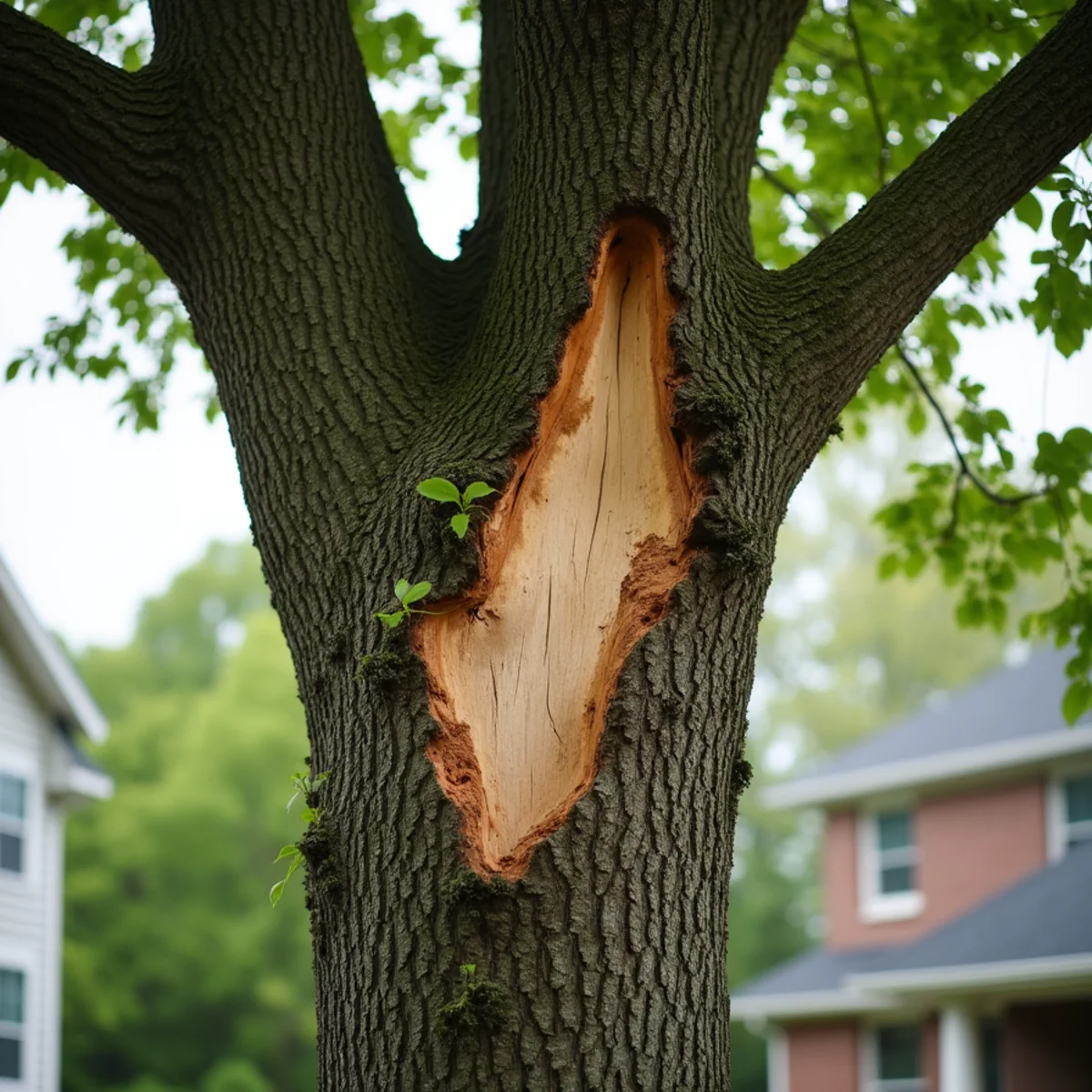
However, horticulturists soon realized that Bradford pears possess a fatal anatomical flaw: their branching architecture is structurally defective. Instead of developing a strong central leader trunk with wide, horizontal scaffolding branches, Bradford pears produce 10 to 20 upright co-dominant stems that erupt from a single point on the trunk at acute, knife-like angles.
As these competing stems expand in diameter, they press tightly against one another, forming deep layers of 'included bark.' Because bark cannot fuse with bark, there is zero interlocking wood grain between the stems. The tree becomes a collection of upright levers held together by sheer surface friction.
Storm Failure Dynamics: Why 35 MPH Winds Split Mature Pears
By the time a Bradford pear reaches 15 to 20 years of age and achieves a height of 30 to 40 feet, the crown becomes exceptionally dense and heavy. In summertime, each broad, heart-shaped leaf acts like a miniature sail.
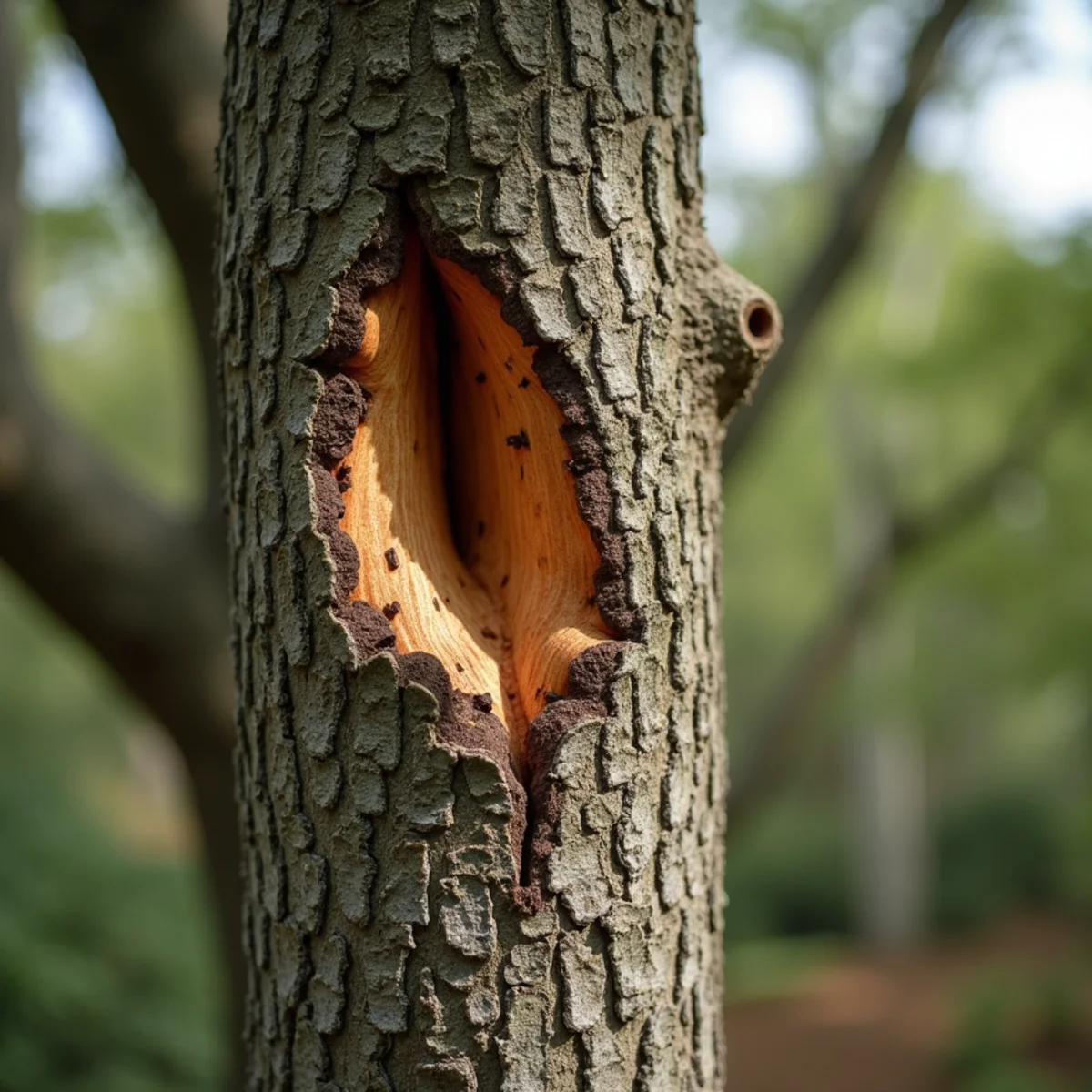
When a standard Piedmont thunderstorm rolls off Lake Norman delivering modest 35 to 45 mph wind gusts, the lateral aerodynamic drag against the upper crown generates catastrophic mechanical leverage. The included-bark union acts as an internal wedge, splitting the trunk down the center.
Homeowners across Lake Norman wake up to find half the tree sheared off, crushing parked cars in driveways, punching through garage roofs, or flattening boundary fences. If half a Bradford pear splits away, the remaining trunk half is hopelessly off-balance and will fail in the next rain.
Questions About Your Trees?
Speak directly with our local tree team. No automated robots.
North Carolina Noxious Weed Listing & Invasive Ecological Threat
The hazards of Bradford pears extend far beyond property damage. In recent years, North Carolina joined neighboring states in classifying Pyrus calleryana as a prohibited noxious weed.
When Bradford pears cross-pollinated with other pear cultivars (such as Chanticleer and Cleveland Select), the resulting seed produced feral, wild Callery pears. These wild variants revert to their ancestral Asian genetics: producing 3-inch, needle-sharp thorns capable of puncturing tractor tires and forming dense, light-choking thickets along roadsides and pastures, displacing native North Carolina flowering dogwoods and redbuds.
The Top 5 Native North Carolina Replacement Trees
Removing a hazardous Bradford pear opens up prime residential yard space for superior native trees that offer four-season beauty, long lifespans, and hurricane-resilient wood architecture: 1. Eastern Redbud (Cercis canadensis): Early-spring magenta-pink blossoms, heart-shaped leaves, and compact 20-to-30-foot mature height ideal for front yards. 2. Flowering Dogwood (Cornus florida): North Carolina's official state flower, featuring delicate white or pink spring bracts, red autumn berries, and exceptional storm resilience. 3. Serviceberry (Amelanchier arborea): Delicate white spring flowers, edible summer berries that songbirds love, and brilliant orange-red autumn foliage. 4. River Birch (Betula nigra): Fast-growing native shade tree with peeling, cinnamon-colored exfoliating bark that thrives in moist Lake Norman clay. 5. White Oak (Quercus alba): The gold standard of North Carolina canopy shade, capable of flourishing for 200+ years with tremendous storm wind resistance.
Safe Dismantling & Complete Stump Grinding Protocol
Dismantling a mature Bradford pear requires controlled rigging. Because the wood is notoriously brittle, certified sawyers cannot drop heavy limb sections without risking secondary split fractures that can whip unpredictably toward homes.
Race City Tree Crew uses specialized aerial bucket lifts and grapple loaders to sectionalize the brittle crown piece-by-piece, chips the debris into organic mulch, and grinds the subterranean stump and lateral roots 8 to 12 inches below turf level. Call our Mooresville dispatch at (321) 478-0689 to replace your hazardous pear with a safe native specimen.
Frequently Asked Questions
Are Bradford pear trees legally banned in North Carolina?
Yes. The North Carolina Department of Agriculture and Consumer Services added Callery/Bradford pear (Pyrus calleryana) to the state noxious weed list, making it illegal to sell, propagate, or commercially distribute these invasive trees anywhere in North Carolina.
What is the NC Bradford Pear Bounty Program?
The NC Bradford Pear Bounty is a statewide environmental partnership between the NC Urban Forest Council, NC State Extension, and the NC Forest Service that provides homeowners with free native replacement trees (such as Serviceberry, Redbud, or Dogwood) when they show proof of removing mature Bradford pears from their property.
Can cables or braces prevent a Bradford pear from splitting?
Cabling and bracing are temporary stopgaps that rarely save mature Bradford pears long-term. Because the species naturally produces dozens of competing upright trunks with soft, brittle wood, cabling one branch union simply transfers structural stress to another weak union higher in the canopy. Removal is the only permanent safety solution.
Why do Bradford pears smell so foul in the spring?
Bradford pear blossoms produce volatile amines (specifically trimethylamine and dimethylamine)—the exact same chemical compounds produced by decaying fish and organic decomposition. They evolved this foul odor to attract blowflies and beetles for pollination rather than honeybees.
How do Bradford pears damage natural North Carolina forests?
While originally bred to be sterile, cross-pollination between different Callery pear cultivars produces viable seeds. Birds consume the fruit and drop seeds in pastures, power lines, and highways, sprouting thorny, impenetrable wild thickets that crowd out native pine and oak seedlings.
Related Tree Services & Local Coverage:
Need Tree Service in Mooresville or Lake Norman?
Our local crews are ready 24/7. Get a transparent written price before any work begins.
Click to call instantly • 24 hours a day
Not Urgent? Send a Request
For the fastest help, call (321) 478-0689. Otherwise, send details below and we will contact you.